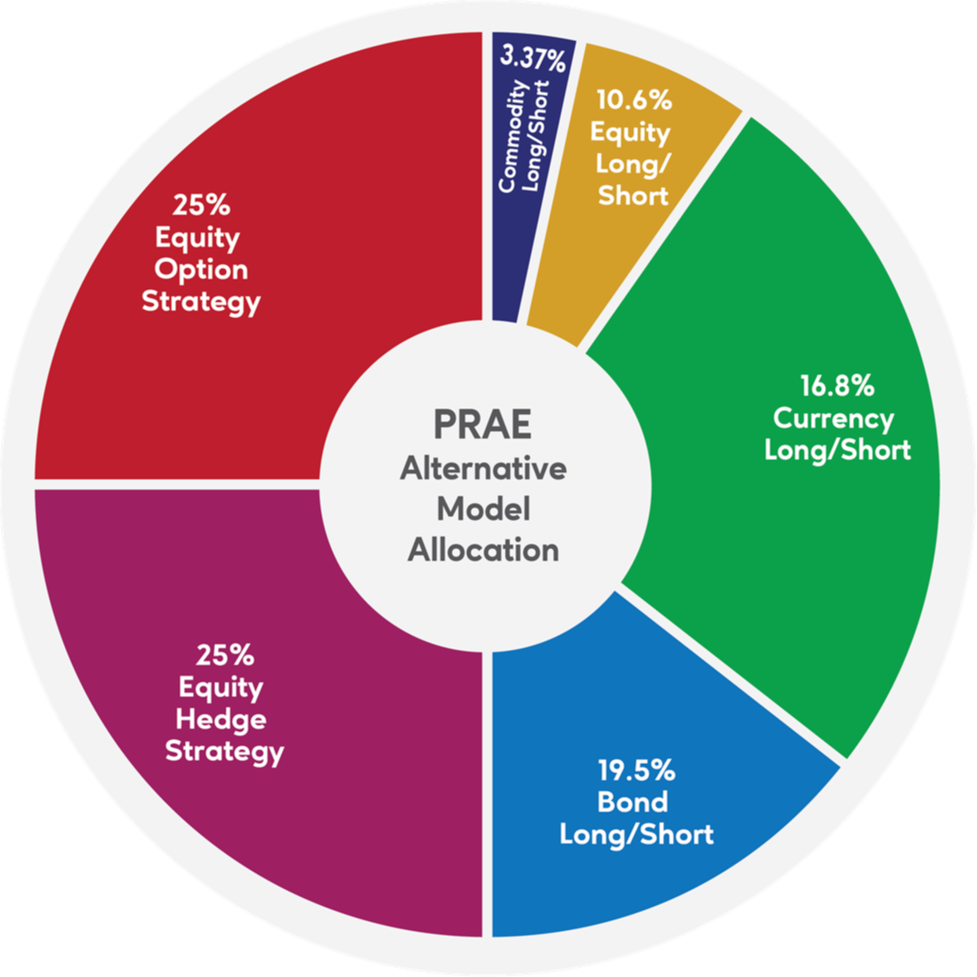
The term Factor or factor investing is an approach that involves targeting specific drivers of return across asset classes such as Large Cap Value, etc. The term Sector represent various divisions of the S&P 500 Index or the economy. The term momentum refers to investing in trends of the stock market that tend to persist. The term Long is a position in a security or derivative that the Fund owns. The term Short is a position of a sold security or derivate that is not owned. Profit can be experienced in a short position if the security goes down in value or loss can be experience if the security goes up in value. This is opposite for a Long position. Future/Managed Futures represents long or short positions in various derivates such as stocks, bonds, commodities and currencies. Equity option strategy is a method of using stock options (calls and/or puts) on individual stocks to achieve a specific goal—such as generating income, hedging risk, or speculating on price movement—by combining one or more option positions. Equity Hedge Strategy refers to a risk management strategy designed to protect an investor's portfolio against potential downturns in the equity or stock market. Correlation refers the the mutual relationship or connection between two or more markets or asset classes. Leverage enables control of much larger futures contract value with a relatively small amount of investor capital. Investments in foreign securities involve risk not associated with investing in U.S. securities that can affect the Fund's performance. Foreign markets, particularly emerging markets, may be less liquid, more volatile and subject to less government supervision than domestic markets. Derivatives can be highly complex and highly volatile and may perform in unexpected ways depending on the type of derivative. As with any security derivatives can be difficult to value and may at times be highly illiquid. This depends on the type of derivative. Derivatives may create leverage, and loss of derivatives transactions may substantially exceed the Fund's initial investment depending on the amount of leverage used. Some derivatives have the potential for unlimited losses.